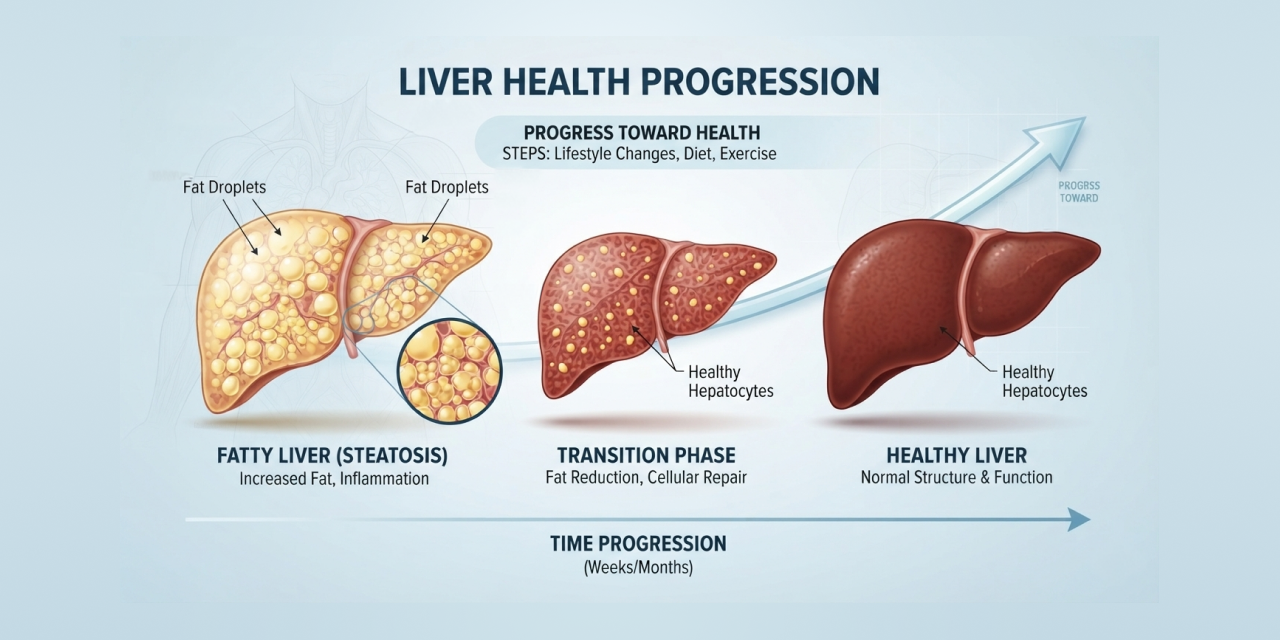
Because the scale hides more than it shows. Body composition analysis splits your weight into fat, muscle, bone, and water, so you know exactly what to lose and what to protect. That shift, from chasing a number to reading your body, is what makes results more likely to be sustainable.
“I just want to lose weight.” We hear it at almost every first consultation, and we understand it. But the patients who succeed long-term always discover that actual weight loss begins with understanding their body.
This article is about that shift, and the measurements behind it.
Ever Wondered Why BMI Is Misleading About Your Health?
Because BMI only knows your height and weight, it cannot tell fat from muscle, or see where fat sits. A rugby player and a sedentary office worker can share the same BMI with completely different health risks. That blindness causes real misclassification, in both directions.
The research on this is striking and recent. A 2026 cross-sectional study from Keck Medicine of USC, published in the Annals of Internal Medicine and analysing data from approximately 5,600 US adults in the National Health and Nutrition Examination Survey (Elhence et al., 2026), found that one in four people with a “normal” BMI actually met the criteria for clinical obesity, and half of those labelled merely overweight were reclassified as obese when fat and health markers were measured directly.
Broader analyses have reached the same conclusion for years, including a review published in Frontiers in Public Health (2017), which found that relying on BMI alone misses more than half of people with excess body fat. This is exactly why BMI is misleading when solely used as a measure of weight loss. It is a reasonable population screening tool, and a poor personal one. Your body deserves a measurement that actually looks inside.
What Does Body Fat Percentage vs BMI Actually Tell You?
Body fat percentage tells you what your weight is made of, while BMI only tells you what it adds up to. That single difference changes how progress is defined: not as weight lost, but as fat lost, muscle kept, and health markers improved.
Here is what each measurement can and cannot see:
| Question you care about | BMI | Body composition analysis |
| How much of me is fat, and how much is muscle? | Cannot tell | Measured directly |
| Is fat sitting around my organs? | Cannot tell | Estimated and tracked |
| Am I losing fat or losing muscle on my diet? | Cannot tell | Tracked at every review |
| Is my “normal” weight hiding excess fat? | Cannot tell | Detected reliably |
| Is my plan actually working? | One blunt number | A full, changing picture |
The body fat percentage vs BMI comparison is not really a contest. One is a rough sorting tool, the other is a map. You would not navigate a new city with a coin flip when a map is available!
| Curious what your weight is actually made of? One assessment answers it. Book your consultation with one of our qualified clinicians. Individual results vary. |
What Is Normal Weight Obesity, and Could You Have It?
Normal weight obesity means having a healthy BMI but an unhealthy level of body fat, and it is far more common than most people expect. Because the scale looks fine, it usually goes completely unnoticed, while the metabolic risk quietly builds in the background.
In a 2023 cross-sectional study of 3,001 adults aged 20 to 95, published in Frontiers in Nutrition (Lahav et al., 2023), 967 participants had a normal BMI. Of those, 26% of men and 38% of women with a normal BMI carried excess body fat, and those individuals showed significantly worse cholesterol and triglyceride profiles than their genuinely lean counterparts. They would have walked out of a standard weigh-in with reassurance they should not have received.
If you have ever been told your weight is fine while feeling that something is not, this may be why. Normal weight obesity hides in plain sight, and only measuring composition, not weight, can tell the difference between a body that is fine and a body that merely weighs fine.
What Simple Home Check Works Before Body Composition Analysis?
Measure your waist, and keep it to less than half your height. That is the official UK guidance, and it is a far better quick check than the scale, because waist size tracks the fat around your organs, the kind that carries the most metabolic risk.
NICE, the UK’s health guidance body, formally recommends that adults keep their waist to less than half their height, a waist-to-height ratio under 0.5, precisely because it captures central fat that BMI misses.
The research behind it includes a detail we love: in a 2014 analysis of UK health survey data by Ashwell and Gibson, published in BMC Medicine, a piece of string cut to half your height is a valid first screening tool. If it will not comfortably fit around your waist, that is worth a conversation. The same analysis estimated that relying on BMI alone would misclassify more than a quarter of “normal weight” people in the UK.
So try the string tonight. It costs nothing, and it asks the right question. Then let a full assessment answer it properly, with actual numbers for fat, muscle, and everything the string cannot see.
How Do Muscle Mass and Metabolism Protect Your Results?
Muscle is your metabolic engine, and protecting it is central to making weight loss sustainable. Muscle tissue burns energy around the clock, so every kilogram you keep supports your metabolism, while every kilogram you lose makes regaining more likely. Sustainable plans are built around this fact.
First, adults naturally lose 3 to 8% of muscle mass per decade after the age of 30, so most of us are already fighting a slow decline, according to a peer-reviewed research review by Volpi and colleagues (Current Opinion in Clinical Nutrition and Metabolic Care).
Second, weight loss itself can accelerate it: a 2024 review in The Lancet Diabetes and Endocrinology reports that 10 to 30% of weight lost through diet alone can be lean mass, rising to 25 to 39% with some newer weight loss medications when muscle is not deliberately protected.
This is the quiet reason so many diets end in weight regain.
The scale celebrated a loss that included the very tissue keeping metabolism strong. Muscle mass and metabolism rise and fall together, which is why our plans pair nutrition with strength work and protein targets, and why we measure muscle at every review rather than assuming.
Losing weight is easy to start. Keeping sustainable weight loss results is a muscle story.
What is Sarcopenic Obesity, the hidden muscle mass and metabolism problem?
Sarcopenic obesity means low muscle and excess fat existing in the same body, and it is the worst of both worlds metabolically. It develops slowly, through age, inactivity, and repeated crash diets, and the scale often hides it completely because the two changes cancel out.
Picture two decades of yo-yo dieting. Each cycle loses some muscle along with fat; each regain returns mostly fat, and the person’s weight ends up roughly where it started. The scale says nothing happened. The body knows otherwise: weaker, hungrier, and metabolically slower than before.
Doctors increasingly treat sarcopenic obesity as its own condition, and it is a large part of why we track muscle as carefully as fat at every review. You cannot manage what you never measure. Repeated crash diets are the opposite of a plan you can live with.
How Does Body Composition Harley Clinic Testing Work?
It is a quick, painless assessment that breaks your weight into fat mass, muscle mass, and water, alongside estimates of visceral fat. Combined with bloodwork, it becomes your personal baseline: the starting map that your entire plan, and every review after it, is measured against.
The process takes minutes and fits into your first consultation as part of our diagnostics, carried out and interpreted by qualified clinicians. From there, the numbers do something the scale never could: they define success properly. Progress at Harley means fat falling, muscle holding or rising, and health markers improving, even in weeks when your total weight barely moves. Reviews with our nutrition and exercise team then adjust the plan based on what is genuinely changing inside your body.
It also changes how people feel about the journey. Watching muscle hold steady while fat drops is motivating in a way a stubborn scale never is. Many patients tell us it is the first time a weight loss plan has ever made sense to them, though experiences and outcomes differ from person to person.
What makes science-based weight loss UK programs sustainable?
Measurement, personalisation, and honest review. A science-based weight loss UK program starts by understanding your body, builds a plan around your actual composition and bloodwork, then keeps adjusting as your body changes. Nothing is guessed, so nothing depends on willpower alone.
- Measure first: Composition and bloodwork before any plan is written.
- Protect muscles deliberately: Protein targets and strength work built in from day one.
- Track what matters: Fat, muscle, and health markers, not just the scale.
- Adjust with evidence: Regular reviews through our programmes, with medical support from qualified clinicians where suitable.
Ready for Body Composition Harley Weight Loss Clinic Testing?
You wanted to lose weight. What you really need is to understand your body, because understanding is what makes results more likely to last. [C2] Weight changes often follow when plans are built on body composition. The scale will follow. It always does, once the plan is built on what you are actually made of.
Learn more about our clinic or speak to the team today.
| Stop chasing a number. Start understanding your body. One assessment, one honest conversation, and a plan measured by what really matters: fat down, muscle protected, health improving. Book your body composition assessment with Harley Weight Loss Clinic today. All assessments are reviewed with a qualified clinician, and individual results vary depending on multiple health factors. |
Frequently Asked Questions About Body Composition Analysis
1. How is body composition actually measured?
Clinics typically use bioelectrical impedance or scan-based methods, which estimate fat, muscle, and water by how your body conducts a harmless signal or absorbs low-dose energy. It is quick, painless, and non-invasive, and repeat measurements under similar conditions make your trend highly reliable.
2. Why does my weight fluctuate so much day to day?
Mostly water, food timing, salt, hormones, and digestion, not fat. Daily swings of a kilogram or more are completely normal and say little about progress. This is precisely why we track composition and trends over weeks rather than reacting to any single morning’s number.
3. Can I lose fat and gain muscle at the same time?
Yes, especially if you are newer to strength training or returning after a break. With adequate protein, resistance work, and a sensible calorie plan, the body can build muscle while drawing on fat stores. Composition tracking is what makes this double progress visible.
4. Is BMI completely useless, then?
Not useless, just limited. BMI remains a reasonable quick screen across large populations, and clinicians still use it as one signal among many. The problem begins when it is treated as a personal verdict. For individual decisions, composition and bloodwork tell the real story.
5. How often should I repeat a body composition assessment?
Every six to twelve weeks works well for most people. That is long enough for genuine change in fat and muscle to show, and frequent enough to adjust your plan while it matters. We schedule reviews around this rhythm, so your plan evolves with your body.